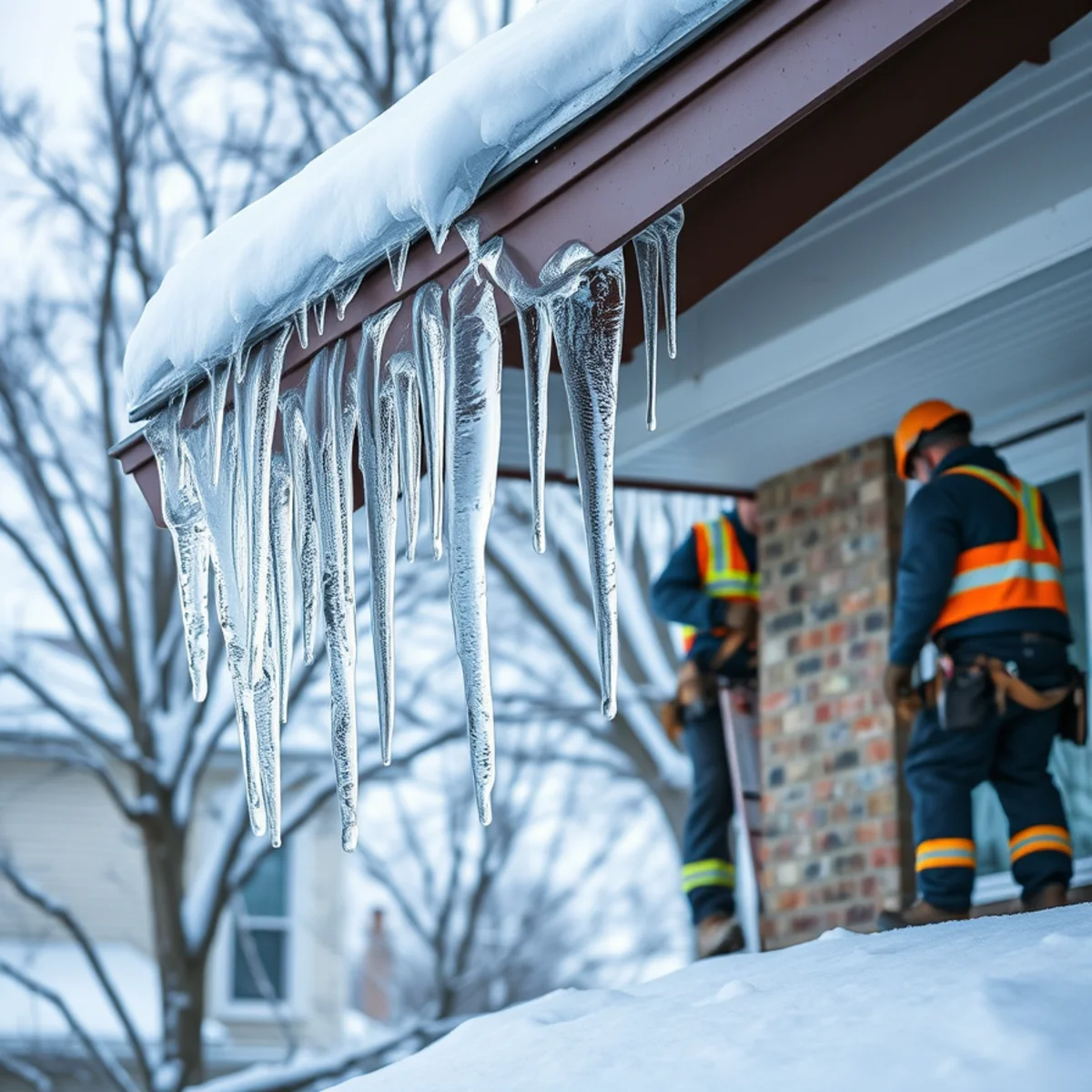
Those thick icicles hanging from your eaves may look like classic Indiana winter scenery, but they are often a warning sign. Ice dams form when a roof is losing heat unevenly, and they can push water back up under your shingles and into your home. The good news is that ice dams are largely preventable once you understand what causes them. Here is how to protect your Indiana roof this winter.
What Causes Ice Dams
An ice dam is a ridge of ice that builds up at the edge of a roof and stops melting snow from draining off. The cause is almost always heat escaping into the attic. Warm air from the living space leaks up and warms the roof deck, which melts the snow on the upper roof. That meltwater runs down until it reaches the cold eaves and gutters, where it refreezes into a growing dam.
As the dam grows, water pools behind it and backs up under the shingles, since shingles are designed to shed flowing water, not hold standing water. From there it finds its way into the decking, insulation, walls, and ceilings. Ice dams are worse in Indiana's northern tier and lake-effect areas, so homes around Fort Wayne see them often, but they happen across the whole state during hard freezes.
How to Prevent Ice Dams in Indiana
Preventing ice dams comes down to keeping the roof deck cold and even in temperature. Three things work together to make that happen.
1. Attic ventilation
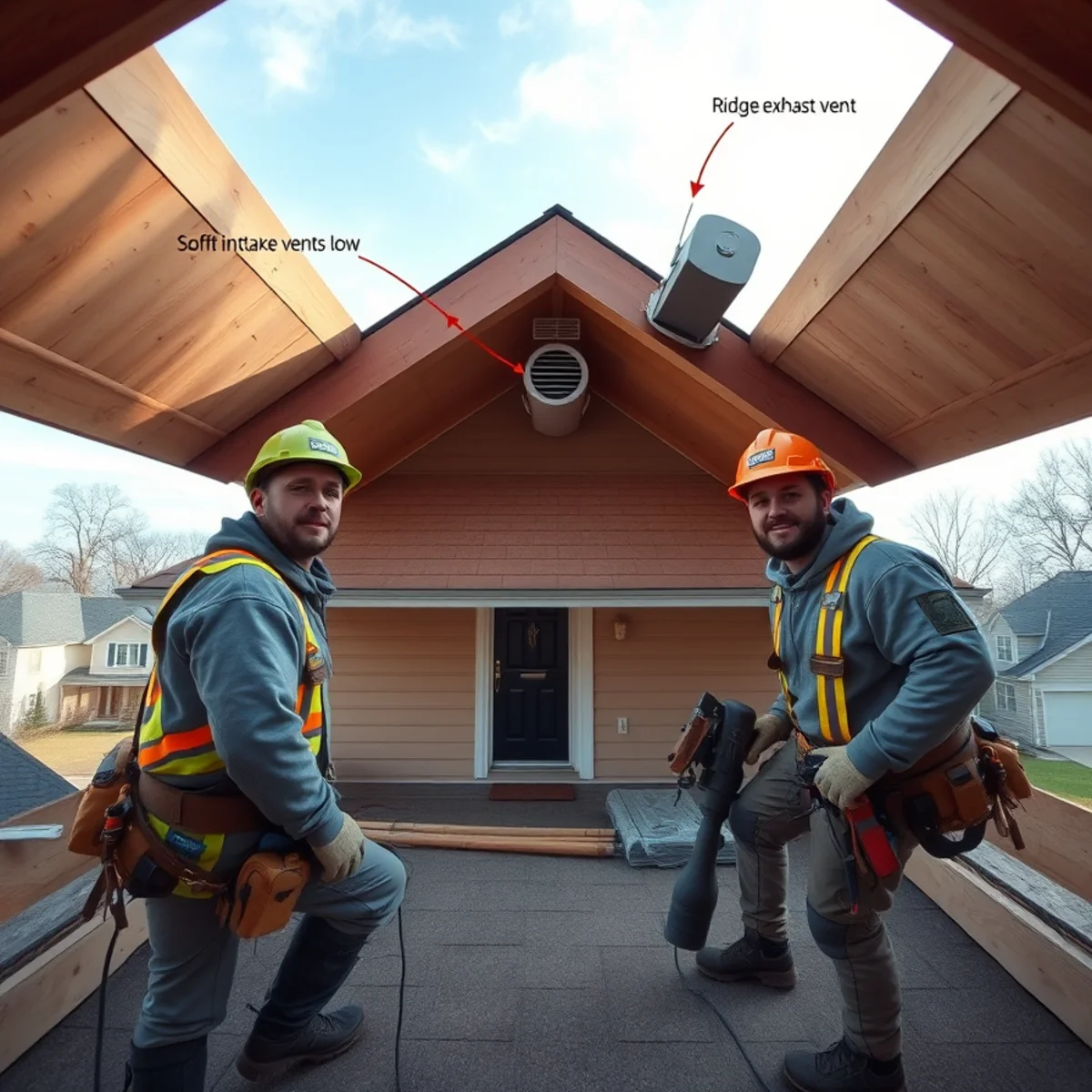
Balanced ventilation, with intake at the soffits and exhaust at the ridge, keeps cold outside air flowing under the roof deck. That flushes out escaping heat before it can melt the snow above. Proper roof and attic ventilation is the foundation of ice-dam prevention, and it protects your shingles year-round. Our attic ventilation guide explains how to get the balance right.
2. Attic insulation and air sealing
Ventilation only works if you are not constantly feeding the attic with warm household air. Sealing gaps around light fixtures, the attic hatch, plumbing stacks, and ductwork, then adding insulation to a good depth, keeps living-space heat where it belongs. Together, air sealing and insulation are the most effective long-term fix.
3. Ice-and-water shield at the eaves
Modern roofing includes a self-sealing ice-and-water shield membrane along the eaves and valleys. It creates a waterproof barrier exactly where ice dams form, so even if a dam does develop, water cannot get through to the decking. Any quality roof replacement in Indiana should include this, and if your older roof lacks it, that is worth knowing.
What Not to Do
Every winter we get calls after well-meaning homeowners have made things worse. Please avoid these:
- Do not chip at ice with a hammer, axe, or hatchet. You will damage the shingles and gutters and can hurt yourself.
- Do not pour hot water on the roof. It refreezes and adds to the problem.
- Do not run into the cold without a plan. Climbing an icy roof is dangerous.
A safer short-term step is a roof rake used from the ground to pull snow off the lower roof after a heavy storm, which removes the fuel for a dam. For a stubborn or leaking dam, call a professional.
Keep Your Gutters in the Fight
Clean, properly pitched gutters and downspouts help meltwater drain away before it can freeze at the edge. Clogged gutters full of fall leaves give ice a place to start. Good gutter installation and repair is a quiet but real part of managing winter water. It will not stop a dam on its own, but it removes one contributing factor.
Address the Root Cause Before Winter
If you get ice dams year after year, the roof is telling you something about ventilation and insulation, not just the weather. A professional roof inspection can pinpoint where heat is escaping and where your defenses are thin, then recommend a fix that actually solves it. We help homeowners in Fort Wayne and Noblesville break the annual ice-dam cycle for good.
The Hidden Cost of Ignoring Ice Dams
An ice dam is more than a winter nuisance. The water it forces under your shingles can soak the roof decking, saturate attic insulation, and run down inside wall cavities where you cannot see it. By the time a stain appears on a ceiling, the damage has often been building for weeks.
Wet insulation also loses much of its R-value, so your heating bills climb at the same time the water is doing its damage. Repeated dams can rot fascia and soffits and feed mold growth in the attic. Catching the cause early, which is heat loss and poor airflow, is far cheaper than repairing the water damage a dam leaves behind. That is why we treat ice dams as a roof-system problem to solve once, not an annual chore to fight with a hammer.
Stop the Icicles at the Source
Ice dams are a symptom of heat loss and poor airflow, and both are fixable. Balanced ventilation, solid insulation and air sealing, and ice-and-water shield at the eaves are the proven combination that keeps water out all winter.
If you are tired of icicles and worried about hidden leaks, let us inspect your roof and attic before the next freeze. Guardian Roofing offers free inspections across Indiana. Call (209) 758-8550 to get ahead of ice-dam season.
Frequently Asked Questions
Ready for a free roof inspection?
Talk to a real local roofer with 25+ years of Indiana experience. Honest advice, no pressure.